Ganesh Chaturthi, also known as Vinayaka Chaturthi, Vinayaka Chavithi and Ganeshotsav, celebrates Lord Ganesha—the deity traditionally worshipped as Vighnaharta, the remover of obstacles, and the divine symbol of wisdom, prosperity and auspicious beginnings.
In 2026, Ganesh Chaturthi will be observed on Monday, 14 September 2026. The principal Ganpati Visarjan on Anant Chaturdashi will take place on Friday, 25 September 2026. The festival is marked by the installation of Ganesh murtis in homes, offices, temples, societies and public pandals, followed by daily puja, aarti, devotional programmes, community celebrations and immersion ceremonies.
This complete guide explains the 2026 date and timings, Ganpati Sthapana, Pran Pratishtha, Shodashopachara Puja, daily Ganesh Utsav rituals, Uttarpuja, Visarjan Vidhi and ten famous Ganpati pandals to visit in Mumbai.
Timing note: The timings below are calculated for Mumbai, Maharashtra, in Indian Standard Time. Panchang timings can vary slightly by city, sunrise method and local religious tradition. Confirm the final muhurat with your family priest or trusted local panchang.
Ganesh Chaturthi 2026 Date and Muhurat
Important dates
Ganesh Chaturthi: Monday, 14 September 2026
Ganpati Sthapana: Monday, 14 September 2026
Main Ganpati Visarjan: Friday, 25 September 2026
Anant Chaturdashi: Friday, 25 September 2026
Chaturthi Tithi timings for Mumbai
Chaturthi Tithi begins: Approximately 7:07 AM on 14 September 2026
Chaturthi Tithi ends: Approximately 7:45 AM on 15 September 2026
Madhyahna Ganesh Puja Muhurat
The traditionally preferred time for Ganesh Sthapana and the principal Vinayaka Chaturthi Puja is during Madhyahna—the middle portion of the day.
Approximate Mumbai Madhyahna Puja Muhurat:
11:21 AM to 1:47 PM on Monday, 14 September 2026
Complete the main Sankalpa, Avahana, Pran Pratishtha and principal puja within this period wherever possible.
Why is Ganesh Chaturthi celebrated?
Ganesh Chaturthi honours the arrival and worship of Lord Ganesha. Devotees welcome Bappa into their homes and communities as an honoured divine guest and seek blessings for wisdom, harmony, prosperity, success and freedom from obstacles.
Public Ganeshotsav celebrations use temporary mandaps and pandals containing elaborately decorated murtis. Alongside worship, many mandals conduct bhajans, cultural performances, social-service programmes, charitable initiatives and community activities.
Preparations before Ganpati Sthapana
Before bringing the murti home or installing it in a pandal:
- Clean and purify the worship area.
- Select a stable, properly levelled platform.
- Cover the platform with a clean red, yellow or white cloth.
- Create a backdrop using flowers, fabric, torans, lighting or a customised Ganpati makar.
- Place the murti so devotees can perform puja safely and comfortably.
- Arrange the kalash, lamp, incense, flowers, durva, fruits and naivedya.
- Keep electrical wires, lamps and combustible decorative materials safely separated.
- Ensure sufficient ventilation, access and emergency clearance for large setups.
For society, corporate and public installations, structural strength, electrical safety, crowd movement, fire precautions and weather protection should be planned professionally.
Ganesh Chaturthi 2026 Puja Samagri
Commonly used puja materials include:
- Ganesh murti, preferably made from natural clay
- Clean platform and decorative cloth
- Kalash, water, mango leaves and coconut
- Roli, kumkum, turmeric, sandalwood and akshata
- Janeu or sacred thread
- Durva grass
- Red hibiscus and other fresh flowers
- Flower garlands
- Betel leaves and betel nuts
- Incense, camphor, cotton wicks and ghee or oil
- Panchamrit ingredients
- Fruits, coconut, jaggery and dry fruits
- Modak, ladoo or other satvik naivedya
- Aarti thali and bell
- Dakshina
- Clean cloth for the murti
- Puja book or printed Ganesh mantras
The exact samagri differs according to family, regional and priestly tradition.
Ganpati Sthapana Vidhi
1. Purification
After bathing and wearing clean clothes, purify the worship area and puja items by sprinkling clean water or Ganga jal.
Light the diya and incense before beginning the main ceremony.
2. Sankalpa
Sit facing east or north and state your intention to perform Ganesh Chaturthi Puja with devotion.
Mention your name, family, place, date and purpose of worship. Pray for wisdom, peace, health, prosperity and the removal of obstacles.
3. Kalash Sthapana
Fill a clean kalash with water and place mango leaves around its opening. Set a coconut above it.
The kalash may be decorated with kumkum, turmeric, flowers and a sacred thread.
4. Positioning the Ganesh Murti
Place the Ganesh murti carefully on the decorated platform. Do not leave it directly on the floor.
The idol should remain stable, clean, properly illuminated and visible to worshippers.
5. Avahana
Avahana means respectfully inviting Lord Ganesha to be present in the murti and accept the worship.
The devotee may offer flowers and chant:
Om Gan Ganapataye Namah
or
Vakratunda Mahakaya Suryakoti Samaprabha
Nirvighnam Kuru Me Deva Sarva-Karyeshu Sarvada
Ganpati Avahana and Pran Pratishtha
Pran Pratishtha is the consecration ritual through which Lord Ganesha is ceremonially invited to reside in the murti for the period of worship.
During a traditional ceremony, the priest or principal devotee performs Avahana, touches or gestures towards the murti with flowers or sacred grass, chants prescribed mantras and requests the divine presence of Lord Ganesha.
After Pran Pratishtha, the murti is worshipped as a living divine guest. Offerings, aarti, naivedya and daily seva are performed respectfully until Uttarpuja and Visarjan.
Traditional Ganesh worship commonly includes Pran Pratishtha followed by the sixteen-part Shodashopachara Puja. Offerings frequently include coconut, jaggery, modak, durva grass and red hibiscus flowers.
Complex Vedic Pran Pratishtha should be conducted under the guidance of a knowledgeable priest. A family performing a simplified home puja may respectfully conduct Sankalpa, Avahana, mantra chanting, offerings and aarti according to its customary practice.
Shodashopachara Ganesh Puja: Sixteen Traditional Offerings
“Shodasha” means sixteen and “Upachara” means forms of respectful service or offering.
The names and sequence can differ between traditions, but the commonly followed sixteen offerings are:
1. Avahana
Invite Lord Ganesha to accept the worship.
2. Asana
Offer a symbolic seat to the deity.
3. Padya
Offer water for washing the divine feet.
4. Arghya
Offer water respectfully to honour the divine guest.
5. Achamaniya
Offer water for ceremonial sipping or purification.
6. Snana or Abhisheka
Offer a symbolic bath using clean water or Panchamrit according to the murti material and family tradition.
Avoid pouring liquid over painted, delicate or electrical decorative idols unless specifically designed for Abhisheka.
7. Vastra
Offer clean cloth or symbolic garments.
8. Yajnopavita
Offer the sacred thread.
9. Gandha
Apply sandalwood paste, kumkum or other permitted sacred fragrance.
10. Pushpa
Offer fresh flowers, garlands and durva.
11. Dhoopa
Offer incense.
12. Deepa
Offer the light of a ghee or oil lamp.
13. Naivedya
Offer modak, ladoo, fruits, coconut, jaggery or another satvik preparation.
14. Tambula
Offer betel leaf and betel nut where customary.
15. Aarti or Nirajana
Perform aarti with a lamp and sing Ganesh aarti.
In Maharashtra, many families sing Sukhakarta Dukhaharta during morning and evening worship.
16. Mantrapushpanjali, Pradakshina and Namaskar
Offer flowers while chanting prayers, perform symbolic pradakshina and conclude with respectful namaskar.
After the puja, distribute naivedya as prasad.
Ganesh Chaturthi Puja Vidhi at Home
A simplified home puja can follow this order:
- Clean and decorate the puja space.
- Light the lamp and incense.
- Perform Achamana and Sankalpa.
- Establish the kalash.
- Place and respectfully welcome the Ganesh murti.
- Perform Avahana and simplified Pran Pratishtha.
- Offer water, cloth, sacred thread and sandalwood.
- Offer durva, red flowers and garlands.
- Offer incense and lamp.
- Present modak, fruits and other naivedya.
- Recite Ganesh Atharvashirsha, Ganesh Stotra or selected mantras.
- Perform aarti.
- Offer Mantrapushpanjali.
- Distribute prasad.
- Continue morning and evening worship until Visarjan.
Rituals during Ganesh Utsav
Ganeshotsav is widely described as a ten-day festival, though its actual Gregorian calendar span can vary because Hindu tithis do not correspond exactly to 24-hour civil days.
The 2026 festival begins on 14 September and culminates with the principal Anant Chaturdashi Visarjan on 25 September.
Festival opening: Sthapana and Pran Pratishtha
The festival begins by welcoming the Ganesh murti with music, flowers and devotional chants. Ganpati Sthapana, Sankalpa, Pran Pratishtha and the main Shodashopachara Puja are performed.
Daily morning and evening puja
The diya is lit and the murti is offered flowers, durva, fragrance, naivedya and aarti.
Families may recite Ganesh Atharvashirsha, Sankat Nashan Ganesh Stotra, Ganesh Chalisa or regional prayers.
Naivedya and prasad
Modak is among the most important festive offerings. Other offerings may include ladoo, puran poli, fruits, coconut preparations, kheer and regional satvik dishes.
Bhajan, kirtan and cultural programmes
Homes and mandals may organise devotional music, bhajans, classical performances, children’s activities and cultural programmes.
Community seva
Public celebrations frequently include blood-donation camps, health check-ups, educational support, food distribution and charitable programmes.
Gauri celebration
In many Maharashtrian homes, the arrival and worship of Gauri or Mahalakshmi forms part of the Ganeshotsav period. The practice and dates depend on family tradition.
Daily decoration
The stage, flowers, lighting and backdrop should be checked every day. Wilted flowers must be replaced, the platform cleaned and electrical connections inspected.
Preparing for Visarjan
Before the selected immersion day, families arrange transport, music, flowers, prasad and an approved immersion location.
Small home murtis may be immersed after one-and-a-half, three, five or seven days, while many public mandals retain the murti until Anant Chaturdashi.
Ganpati Uttarpuja Vidhi
Uttarpuja is the concluding worship performed before moving the murti for Visarjan.
It is a respectful farewell rather than an abrupt end to worship.
Steps for Uttarpuja
- Clean the puja area and light the diya.
- Offer fresh flowers, durva and sandalwood.
- Offer the final naivedya.
- Perform Ganesh aarti.
- Offer Mantrapushpanjali.
- Thank Lord Ganesha for accepting the family’s or community’s worship.
- Ask forgiveness for mistakes or omissions made during the celebration.
- Pray for Bappa’s return the following year.
- Perform symbolic movement of the murti only after completing the prayer.
- Carefully remove decorations that should not enter the immersion water.
Devotees traditionally chant:
Ganpati Bappa Morya!
Pudhchya Varshi Lavkar Ya!
Ganpati Visarjan Vidhi
Ganpati Visarjan symbolises the ceremonial return of the physical form of the deity to nature while the divine presence remains in the hearts of devotees.
Visarjan procedure
- Perform Uttarpuja and final aarti.
- Offer flowers, durva, coconut and naivedya.
- Move the murti carefully from the platform.
- Carry it in a peaceful devotional procession.
- Continue chanting Ganesh mantras and aarti.
- Reach an officially permitted immersion location.
- Perform a final prayer.
- Remove plastic, metal, electrical lights and non-biodegradable décor.
- Immerse the murti respectfully.
- Return home without bringing immersion water unless required by family tradition.
Anant Chaturdashi marks the final major immersion day of Ganeshotsav and is associated with large public processions and community Visarjan ceremonies.
Eco-Friendly Ganpati Visarjan
Choose a natural-clay or shadu-mati murti decorated with non-toxic colours wherever possible.
Good environmental practices include:
- Use artificial immersion ponds provided by civic authorities.
- Remove flowers and decorations before immersion.
- Compost natural flower waste.
- Avoid plastic garlands, thermocol and glitter.
- Keep batteries, electrical fittings and metal frames out of the water.
- Use reusable fabric, wood, metal or paper décor.
- Follow official BMC, police and pollution-control instructions.
Mumbai has increasingly expanded the use of artificial ponds for household and public idol immersion. However, rules relating to POP idols, recycling and immersion methods may change, so organisers should verify the final 2026 BMC and Maharashtra Pollution Control Board guidelines before installation or Visarjan.
Ten Famous Ganpati Pandals to Visit in Mumbai
The themes, entry systems and darshan hours for 2026 may not be announced until closer to the festival. Check each mandal’s official updates before travelling.
1. Lalbaugcha Raja, Lalbaug
Lalbaugcha Raja is one of Mumbai’s most recognised public Ganpatis. Established in 1934, it is popularly regarded as a “Navsacha Ganpati,” associated with devotees’ prayers and vows.
The pandal normally offers separate arrangements for Mukh Darshan and Navsachi Darshan. Waiting times can be extremely long, particularly on weekends and the final festival days.
2. Mumbaicha Raja, Ganesh Galli, Lalbaug
Located close to Lalbaug Market, Mumbaicha Raja is known for grand architectural themes, elaborate replicas and large-scale decorative execution.
The pandal is often a major attraction for visitors interested in stage design, themed environments and monumental festive fabrication.
3. GSB Seva Mandal, King’s Circle
GSB Seva Mandal is admired for its traditionally adorned Ganesh murti, devotional atmosphere, detailed rituals and extensive use of donated gold ornaments.
It is particularly popular among devotees seeking a more ritual-focused and serene darshan experience.
4. Andhericha Raja, Andheri West
Andhericha Raja is known for large thematic installations, cultural storytelling and socially relevant concepts.
Its western-suburban location makes it an important destination for residents of Andheri, Jogeshwari, Goregaon and nearby areas.
5. Chinchpoklicha Chintamani, Chinchpokli
One of Mumbai’s historic public Ganpatis, Chinchpoklicha Chintamani is associated with a strong community tradition dating to the early twentieth century.
Its arrival procession, decoration and devotional atmosphere attract large crowds every year.
6. Khetwadicha Ganraj, Khetwadi
The Khetwadi area is known for multiple Ganesh mandals situated close together. Khetwadicha Ganraj is especially associated with impressive idol scale, intricate ornamentation and artistic detailing.
Visitors can often cover several nearby pandals during the same walking route.
7. Girgaoncha Raja, Girgaon
Girgaoncha Raja represents Mumbai’s older community-based Ganeshotsav tradition.
The celebration is known for preserving cultural character, traditional styling and the historic spirit of the public Ganesh festival.
These seven pandals are repeatedly identified among Mumbai’s best-known Ganeshotsav destinations.
8. Parelcha Raja, Nare Park, Parel
Parelcha Raja is known for tall idols, impressive arrival ceremonies and large architectural pandal themes.
Recent celebrations have included major temple-inspired settings and large-scale decorative replicas.
9. Tejukaya Mansion Ganpati, Lalbaug
Tejukaya Mansion is another significant attraction in the Lalbaug-Parel Ganeshotsav circuit.
Its artistic presentation and convenient location make it suitable for inclusion in a combined Lalbaug, Parel and Chinchpokli pandal route.
10. Sahyadri Krida Mandal, Tilak Nagar
Tilak Nagar and Chembur are well known for large community Ganeshotsav celebrations and creative pandal decoration.
Sahyadri Krida Mandal is popular for elaborate visual themes, immersive sets and detailed festive presentation.
Suggested Mumbai Ganpati Pandal Route
South and Central Mumbai route
Start with:
- Girgaoncha Raja
- Khetwadi Ganpatis
- Chinchpoklicha Chintamani
- Mumbaicha Raja
- Lalbaugcha Raja
- Tejukaya Mansion
- Parelcha Raja
This route may require several hours because of road restrictions, queues and pedestrian crowd movement.
Eastern suburbs route
Cover:
- GSB Seva Mandal at King’s Circle
- Tilak Nagar and Chembur mandals
- Sahyadri Krida Mandal
Western suburbs route
Plan a separate visit to:
- Andhericha Raja
- Other major Andheri, Vile Parle and Goregaon mandals
Tips for Visiting Mumbai Ganpati Pandals
- Prefer weekdays or early morning hours where permitted.
- Use public transport because parking and road access may be restricted.
- Carry water, but avoid unnecessary baggage.
- Wear comfortable and respectful clothing.
- Protect phones and valuables in crowded areas.
- Do not block darshan queues for photography.
- Follow police, volunteer and mandal instructions.
- Check live queue and traffic updates.
- Avoid taking elderly visitors and small children into extreme crowds.
- Keep emergency contact details accessible.
- Confirm 2026 opening hours, entry gates and special darshan arrangements before departure.
Ganesh Chaturthi Decoration Ideas for 2026
Traditional Maharashtrian theme
Use torans, brass diyas, banana leaves, marigold garlands, rangoli and traditional fabric.
Royal golden mandap
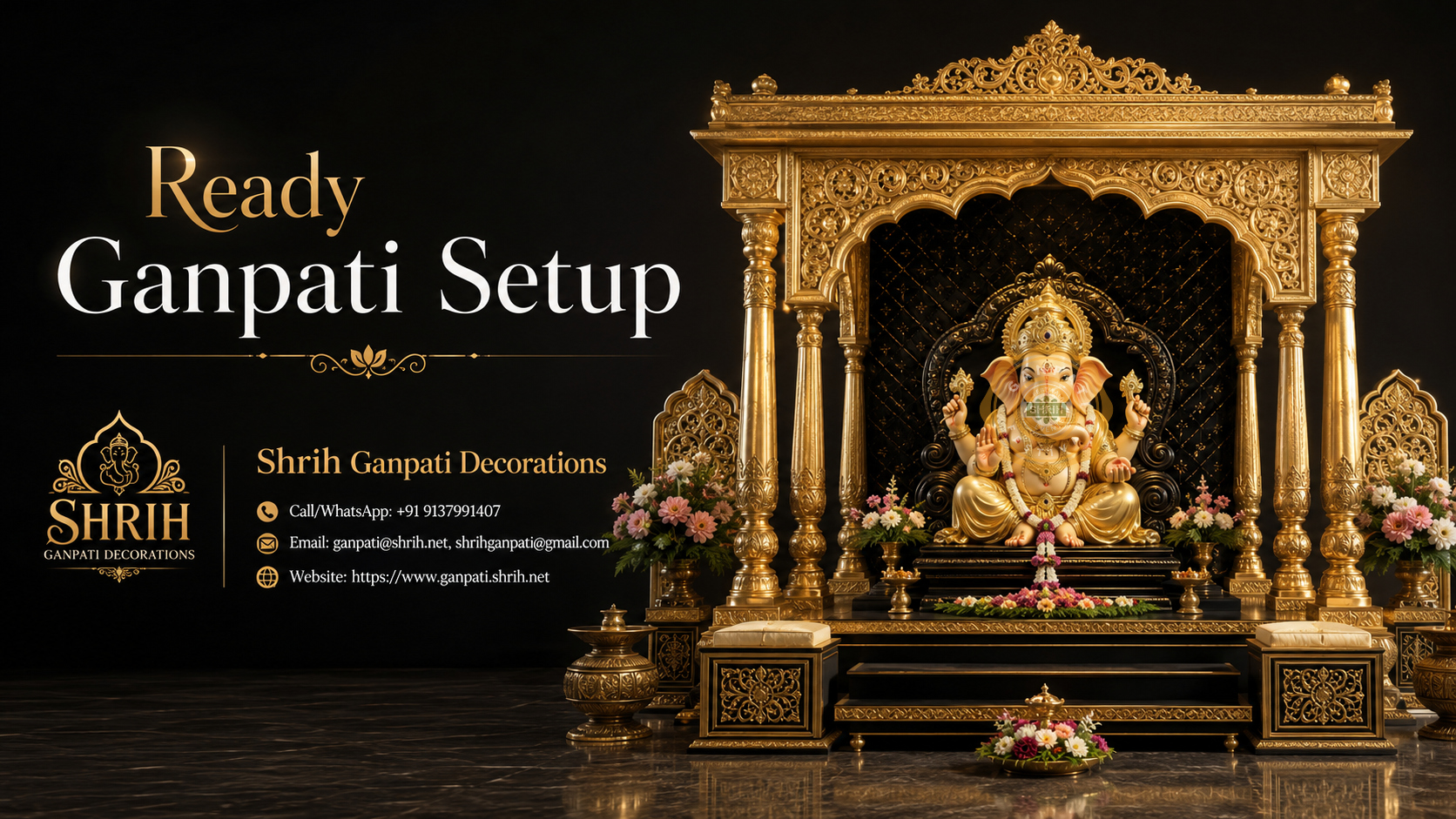
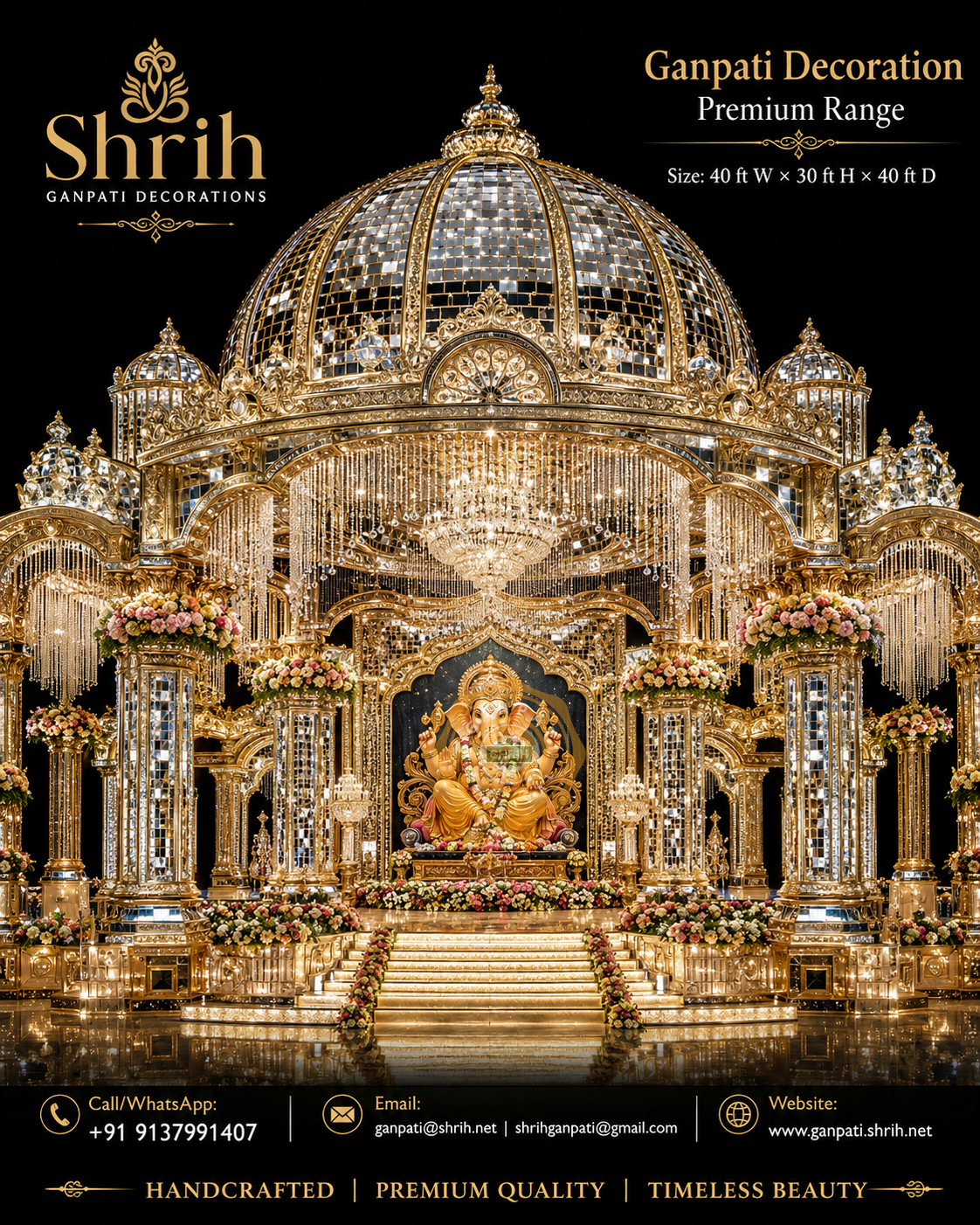
Create a temple-style background using gold-toned pillars, carved panels, a lotus platform, chakra halo and warm lighting.
Floral Ganpati decoration
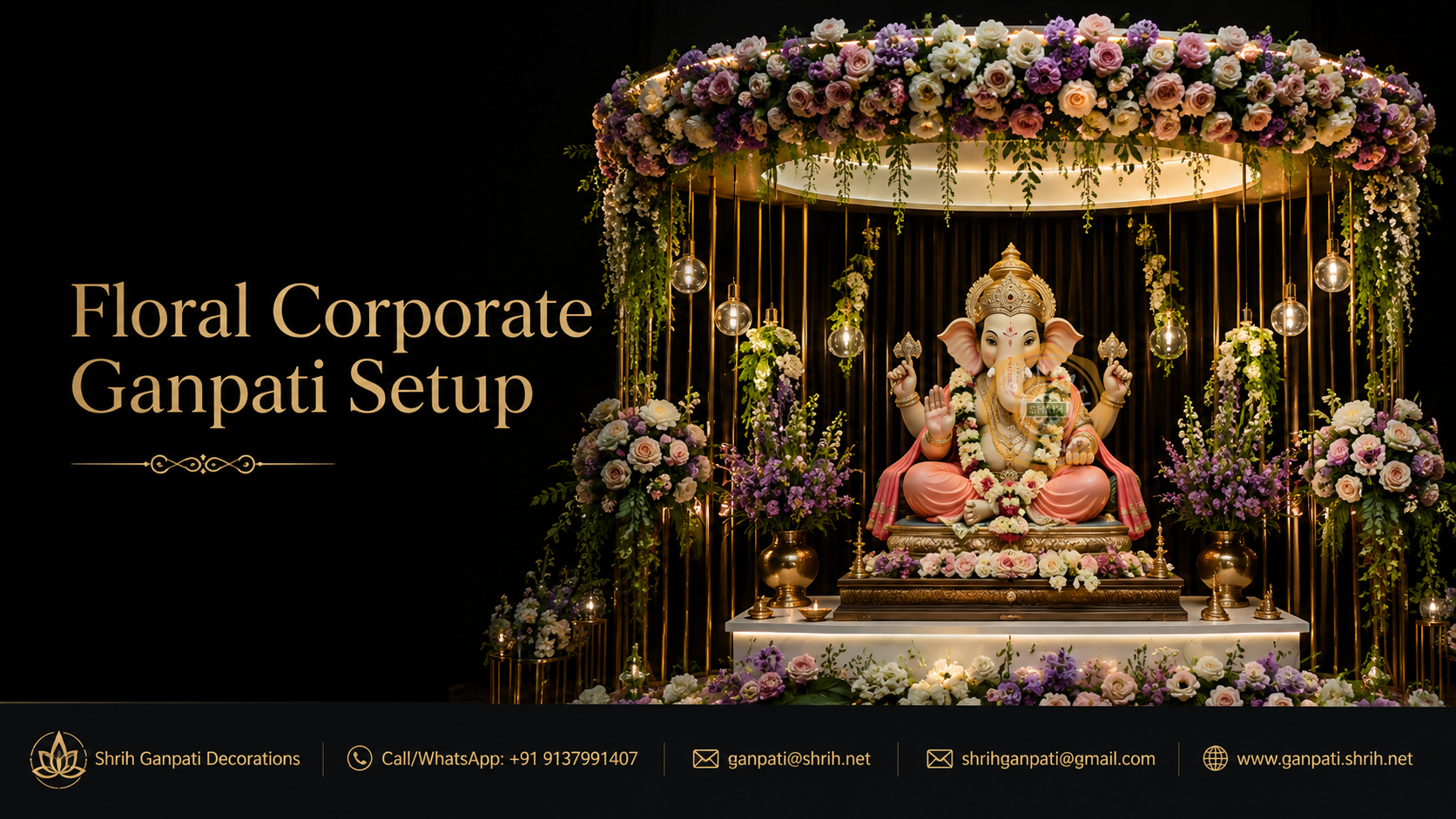
Combine roses, marigolds, orchids, lilies, chrysanthemums and carnations with coordinated fabric draping.
Eco-friendly Ganpati theme
Use bamboo, cane, jute, paper, cloth, wood, natural flowers, clay diyas and reusable structures.
Lotus and chakra theme
Position the murti on a lotus-inspired platform with a circular illuminated halo or chakra backdrop.
Modern luxury setup
Use clean architectural lines, warm white lighting, restrained floral work, customised panels and elegant photo-friendly staging.
Corporate Ganpati setup
Include a professional mandap, safe electrical installation, controlled branding, a reception photo point and organised visitor flow.
Sarvajanik Ganpati pandal
Plan the stage, idol platform, entrance gate, queue barricading, electrical system, fire safety, weatherproofing, backstage access and emergency exits as one integrated project.
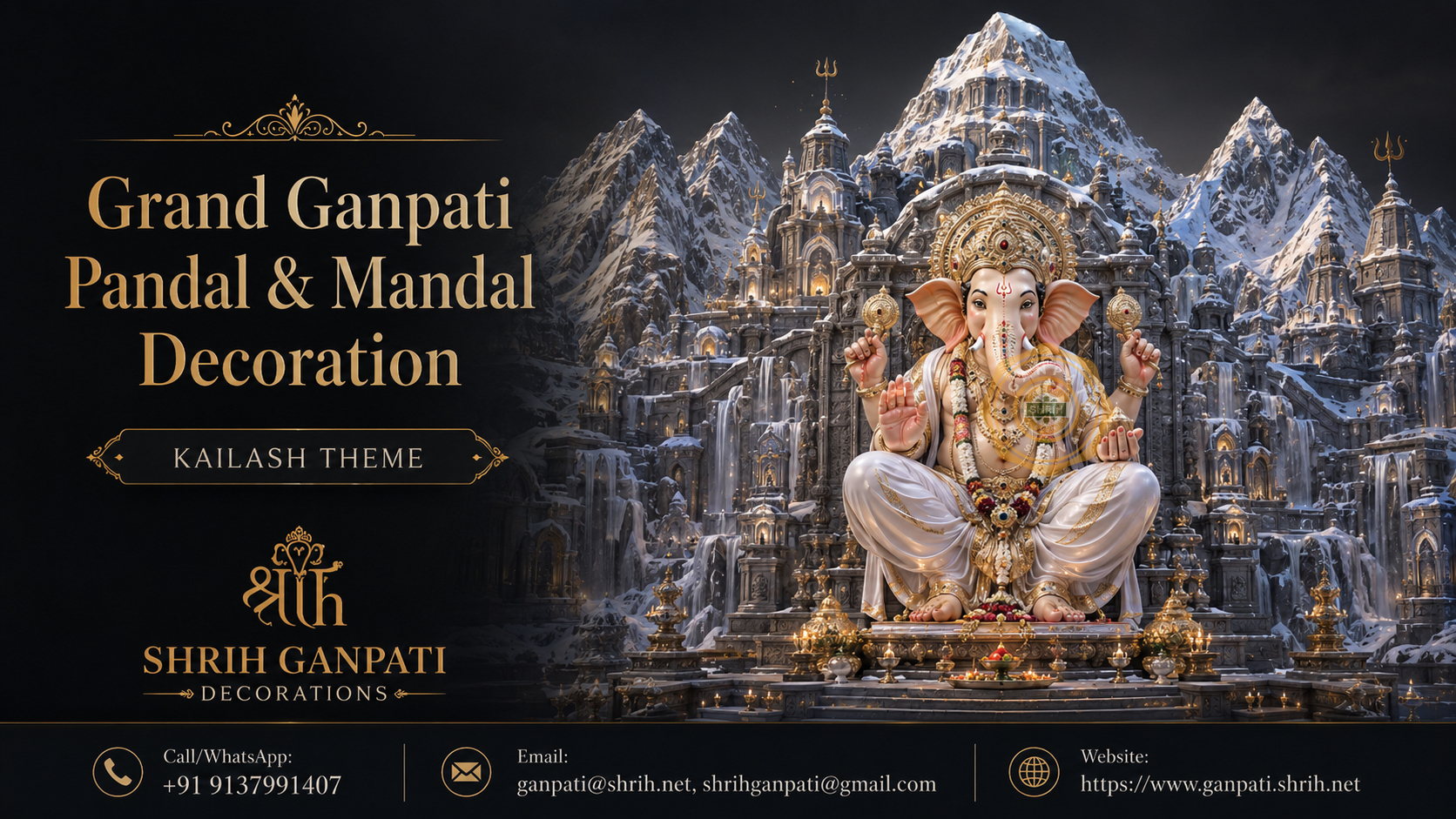
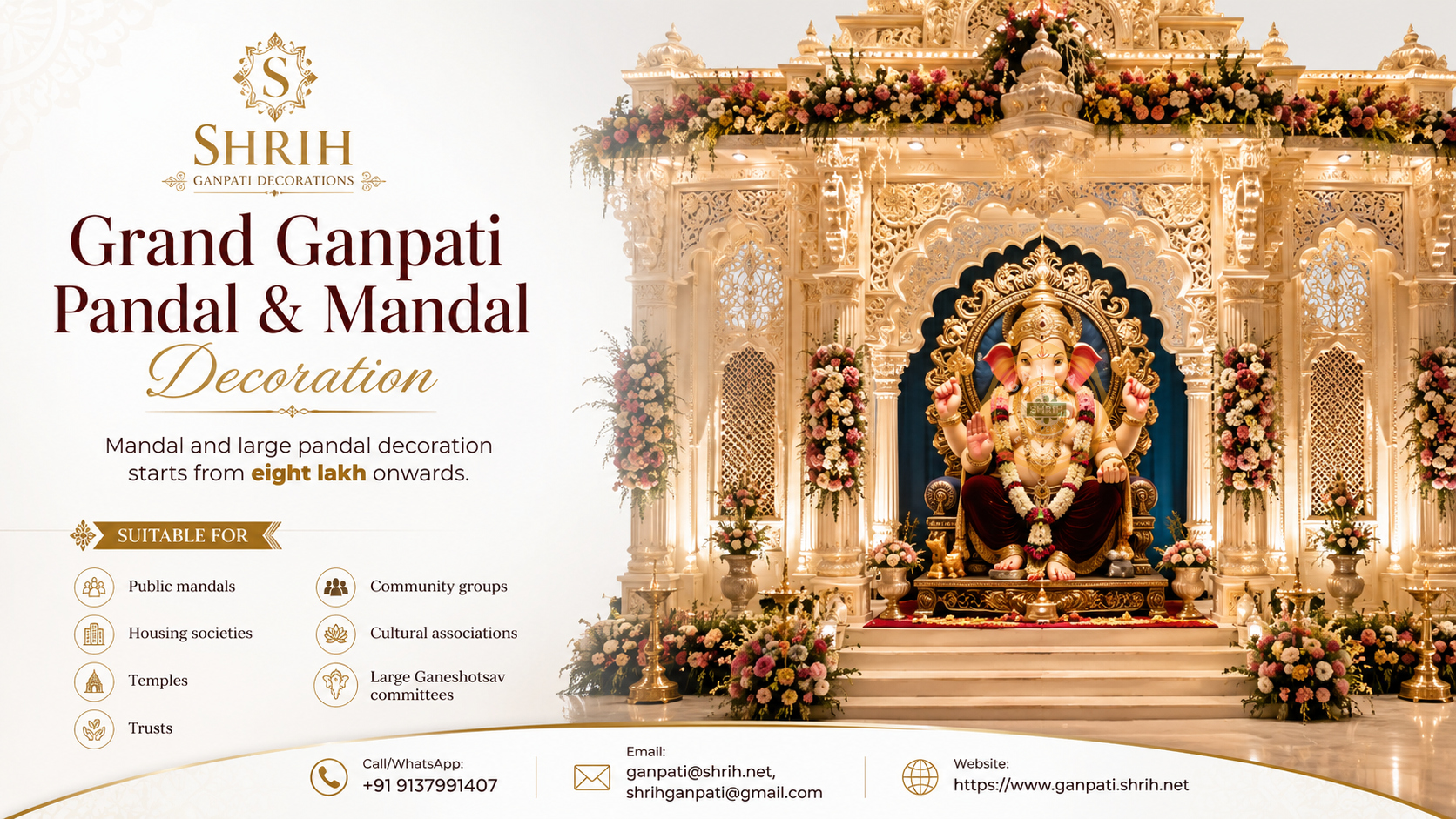
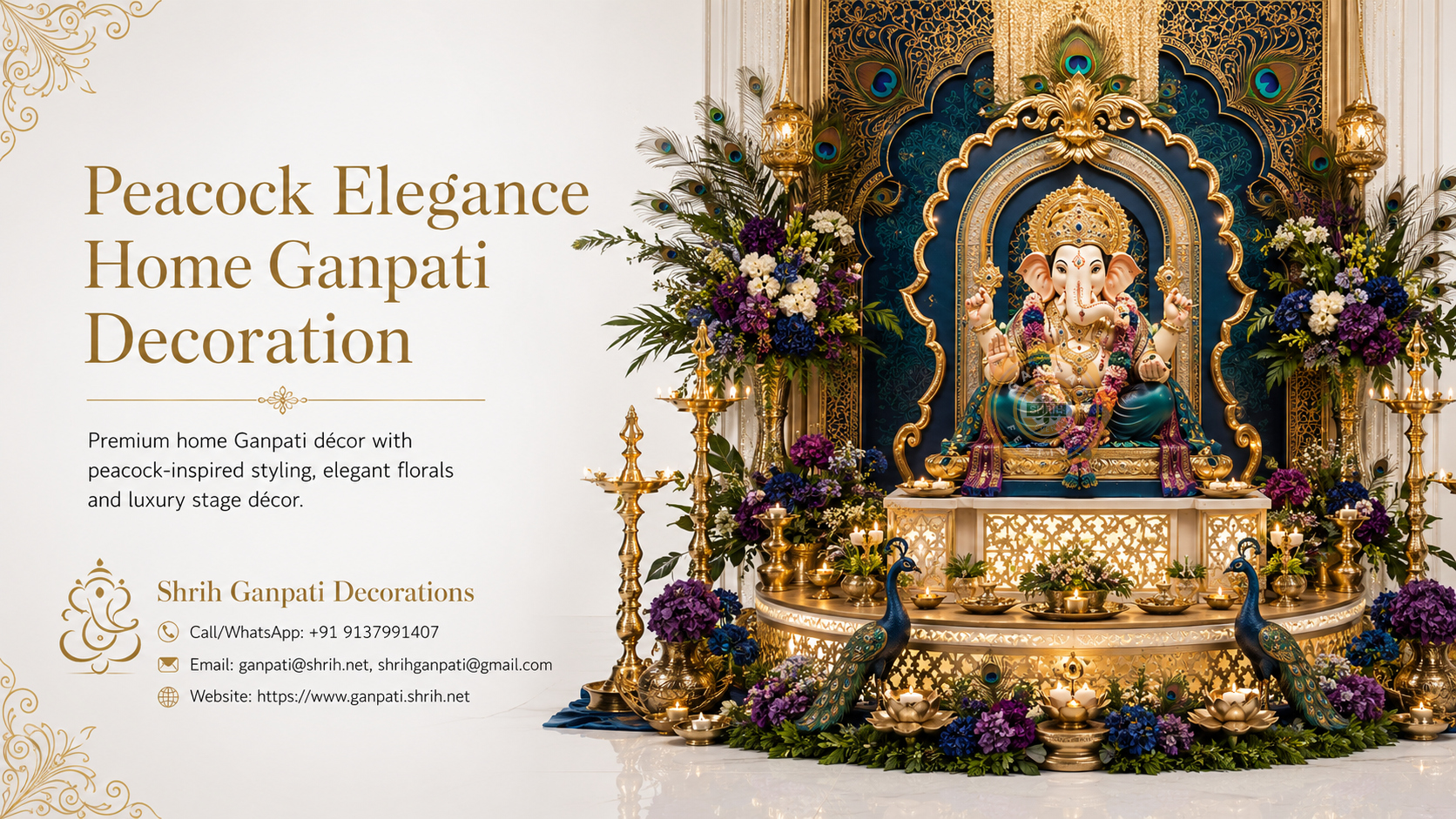
Professional Ganpati Decoration by Shrih
A premium Ganpati setup requires more than placing decorations around the murti. The idol scale, viewing angle, stage height, structural framework, background, flowers, lighting, entrance, queue movement and photography points must work together.
Shrih Ganpati Decorations creates customised concepts for:
- Home Ganpati mandaps
- Office and corporate Ganpati decoration
- Society Ganpati pandals
- Temple festival decoration
- Sarvajanik Ganeshotsav pandals
- Ganpati makar and backdrop decoration
- Idol stage and platform design
- Entrance gates and welcome arches
- Flower decoration
- Lighting and decorative installations
- Theme-based Ganpati setups
- Large-scale all-India festive execution
The service is positioned for premium, devotional and professionally executed Ganpati decoration across home, office, temple, society, corporate and public-pandal environments.
Frequently Asked Questions
When is Ganesh Chaturthi in 2026?
Ganesh Chaturthi will be observed on Monday, 14 September 2026.
What is the Ganpati Sthapana Muhurat in Mumbai?
The approximate Madhyahna Sthapana and Puja Muhurat in Mumbai is from 11:21 AM to 1:47 PM on 14 September 2026.
When does the Chaturthi Tithi begin?
For Mumbai, the Chaturthi Tithi begins at approximately 7:07 AM on 14 September 2026.
When does the Chaturthi Tithi end?
It ends at approximately 7:45 AM on 15 September 2026 in Mumbai.
When is Ganpati Visarjan in 2026?
The principal Anant Chaturdashi Ganpati Visarjan will take place on Friday, 25 September 2026.
Can Ganpati be immersed before Anant Chaturdashi?
Yes. Families commonly perform Visarjan after one-and-a-half, three, five or seven days according to their tradition.
What is Pran Pratishtha?
Pran Pratishtha is the consecration ritual through which Lord Ganesha is ceremonially invited to be present in the murti during worship.
What is Shodashopachara Puja?
It is a traditional form of worship involving sixteen respectful offerings, including water, flowers, fragrance, lamp, food and aarti.
What should be offered to Lord Ganesha?
Common offerings include durva grass, red hibiscus, modak, ladoo, coconut, jaggery, fruits, flowers, incense and a ghee lamp.
Which are the most famous Ganpati pandals in Mumbai?
Popular destinations include Lalbaugcha Raja, Mumbaicha Raja, GSB Seva Mandal, Andhericha Raja, Chinchpoklicha Chintamani, Khetwadicha Ganraj and Girgaoncha Raja.
Does Shrih provide Ganpati decoration outside Mumbai?
Shrih Ganpati Decorations undertakes selected premium Ganpati decoration projects across India, subject to location, scale, feasibility and execution requirements.
Book Premium Ganpati Decoration for 2026
Bring devotion, craftsmanship and festive grandeur together with a professionally planned Ganpati setup.
From elegant home mandaps and corporate Ganpati installations to society stages, entrance gates and large sarvajanik Ganeshotsav pandals, Shrih plans customised decoration concepts around the idol, space, theme, budget and expected visitor experience.
SHRIH GANPATI DECORATIONS
Call/WhatsApp: +91 9137991407
Email: ganpati@shrih.net, shrihganpati@gmail.com
Website: ganpati.shrih.net
SHRIH – MAKING LIFE A CELEBRATION!